io.github.shinpr/mcp-image MCP Server
io.github.shinpr/mcp-image
Generate and edit images with AI-powered prompt optimization across Gemini, OpenAI, and BytePlus providers.
What is the io.github.shinpr/mcp-image MCP server?
The MCP Image Generator is an MCP server that generates and edits images from natural-language prompts using Google Gemini, OpenAI GPT Image, or BytePlus Seedream. It automatically enhances prompts with photographic details like lighting, composition, and camera work, then returns the generated image as an MCP resource.
This server turns plain-language image requests into high-quality generated images by intelligently enhancing prompts with visual details before sending them to your chosen image provider. It supports multiple quality presets (fast, balanced, quality), image editing, character consistency, custom aspect ratios, and resolution up to 4K. Works with Cursor, Claude Code, Codex, and other MCP-compatible tools.
How to install io.github.shinpr/mcp-image
Copy-paste configuration for popular MCP clients.
IMAGE_PROVIDERImage provider to use: 'gemini' (default), 'openai', or 'seedream'
GEMINI_API_KEYsecretGoogle Gemini API key for image generation when IMAGE_PROVIDER=gemini (get from https://aistudio.google.com/apikey)
OPENAI_API_KEYsecretOpenAI API key for image generation when IMAGE_PROVIDER=openai. Requires OpenAI organization verification to access GPT Image 2.5 (https://platform.openai.com/settings/organization/general)
ARK_API_KEYsecretBytePlus ModelArk AP region API key required when IMAGE_PROVIDER=seedream
IMAGE_OUTPUT_DIRAbsolute or working-directory-relative path where generated images will be saved (defaults to ./output)
IMAGE_QUALITYDefault quality preset: 'fast' (default), 'balanced', or 'quality'
SKIP_PROMPT_ENHANCEMENTSet to 'true' to disable automatic prompt optimization and use direct prompts
Tools & capabilities
Tools this server exposes to the agent.
generate_image— Generate or edit images from text prompts with support for quality presets, aspect ratios, resolution, character consistency, image blending, world knowledge, Google Search grounding, and purpose-aware generation.
Use cases
- Generate product photography and recipe images with photorealistic details and proper lighting
- Create consistent character artwork across multiple images for storyboards or marketing materials
- Edit existing images with natural-language instructions while preserving style and visual details
- Generate high-resolution 4K images for final deliverables and critical visuals
- Produce images in custom aspect ratios from square to ultra-wide (21:9) or ultra-tall (1:8) formats
io.github.shinpr/mcp-image MCP server FAQ
It generates and edits images from natural-language prompts by automatically enhancing them with photographic details (lighting, composition, camera work, palette) before sending to Google Gemini, OpenAI GPT Image, or BytePlus Seedream. Returns the image as an MCP resource.
The server itself is free and open-source (MIT license), but you need API keys from your chosen provider: Google Gemini (free tier available), OpenAI, or BytePlus ModelArk (paid services).
Add to ~/.cursor/mcp.json or .cursor/mcp.json in your project with the command 'npx -y mcp-image' and set GEMINI_API_KEY and IMAGE_OUTPUT_DIR environment variables. See the README for full configuration examples.
Run 'claude mcp add mcp-image --env GEMINI_API_KEY=your-key --env IMAGE_OUTPUT_DIR=/path/to/images -- npx -y mcp-image' in your project directory, or use --scope user for global installation.
You need one API key depending on your provider: GEMINI_API_KEY for Google Gemini (default), OPENAI_API_KEY for OpenAI, or ARK_API_KEY for BytePlus Seedream in the AP region.
Yes, set SKIP_PROMPT_ENHANCEMENT=true to send prompts directly to the image generator unchanged.
README (reference)
Source of truth, from the repository.
MCP Image Generator 🍌
Generate and edit images from Cursor, Claude Code, Codex, or any MCP-compatible tool. Supports Google Gemini, OpenAI GPT Image, and BytePlus Seedream.



This MCP server turns a plain-language request into an image file. It adds relevant photographic details such as lighting, camera angle, materials, and palette, then returns the saved image as an MCP resource.
How It Works
You: "a roast chicken for a recipe page, partway through
      carving so you can see how juicy it is"
        ↓
  Your AI assistant sends the request to mcp-image
        ↓
  Prompt enhancement adds relevant photographic details
  (subject, lighting, camera, and palette)
        ↓
  The selected provider generates the image
  (using the configured grounding, consistency, and resolution options)
        ↓
  Saved file, returned as an MCP resource
Your AI assistant supplies the style, purpose, and context from your request. mcp-image fills in missing visual details and selects the generation settings.
The prompt optimizer uses a Subject–Context–Style framework. It runs on Gemini 2.5 Flash by default, OpenAI Responses when IMAGE_PROVIDER=openai, or ModelArk Responses when IMAGE_PROVIDER=seedream. It adds missing details about the subject, environment, lighting, and camera work while keeping the details already present in the request. Detailed prompts receive fewer changes.
Example
You write: "a photo of a roast chicken dinner for a recipe site. it should look like it was actually cooked, and it should be partway through being carved so you can tell how juicy it is"
What the server sends to the image model: "...a beautifully roasted whole chicken, golden-brown and glistening, resting on a rustic wooden cutting board. One leg is partially carved, revealing tender, succulent white meat and rich, glistening juices pooling around the carving knife ... shallow depth of field to keep the focus sharply on the carved chicken."
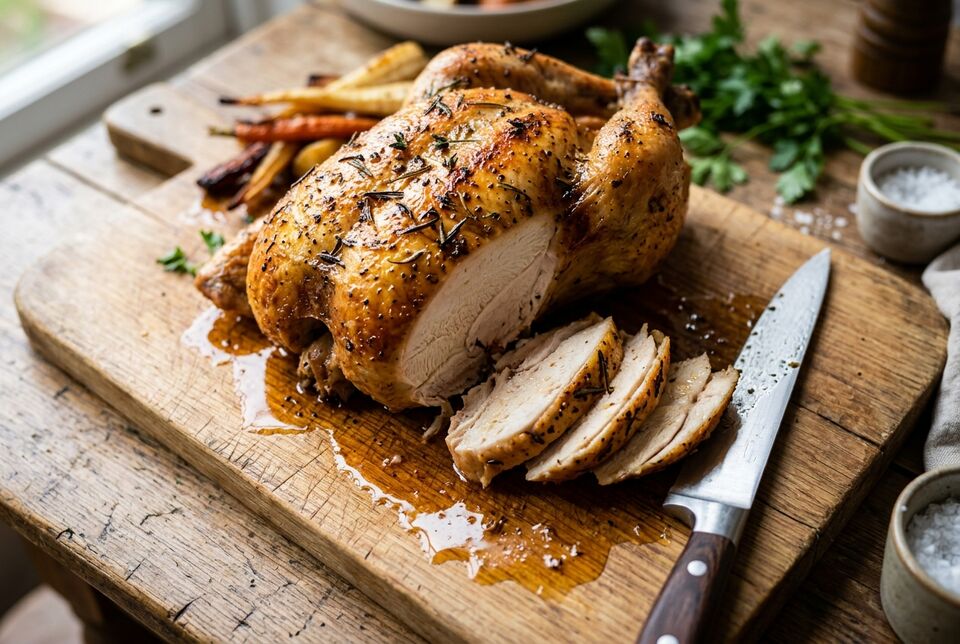
Gemini provider, default fast preset.
What carried through:
for a recipe site→ one subject, with everything else kept subordinateactually cooked→ juices spread across the board, uneven browningpartway through being carved→ the cut face, with slices laid beside ithow juicy it is→ close framing and shallow depth of field on the cut
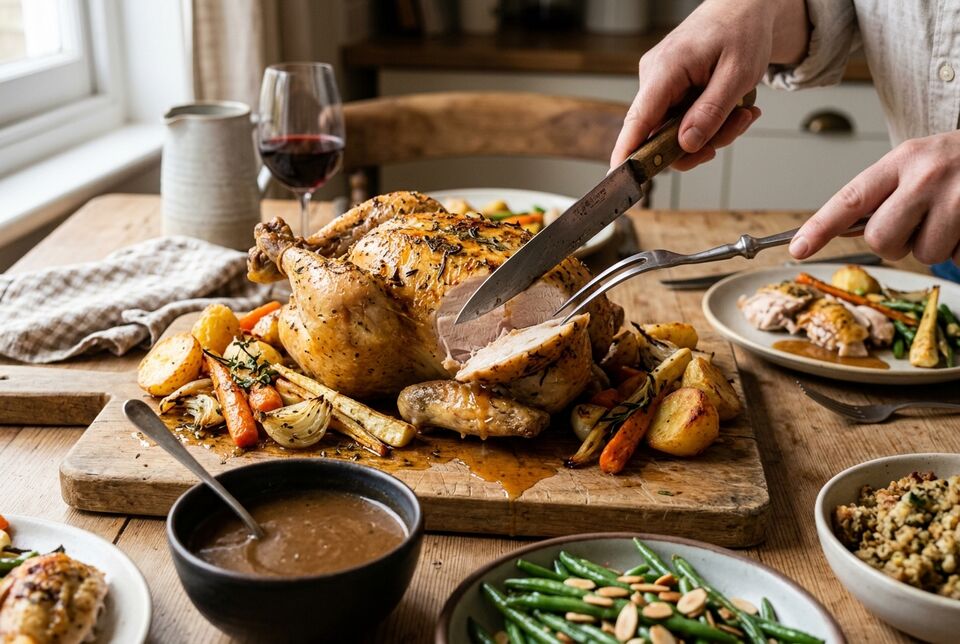
Set SKIP_PROMPT_ENHANCEMENT=true to send your prompt through unchanged.
Features
- Prompt enhancement: Adds lighting, composition, camera, and palette details using the selected provider's text model.
- Image providers: Set
IMAGE_PROVIDER=openaifor OpenAI GPT Image orIMAGE_PROVIDER=seedreamfor BytePlus Seedream through ModelArk. - Quality presets: Select
fast,balanced, orquality. Each provider maps these values to a supported model route. See Quality Presets. - Image editing: Edit an existing image with natural-language instructions while retaining its style and visual details.
- Resolution controls: Request up to 4K, depending on the provider and quality route.
- Aspect ratios: Supports formats from square (1:1) to ultra-wide (21:9) and ultra-tall (1:8).
- Character consistency: Keep a character's appearance consistent across storyboards, product shots, or a series of images.
- Provider-specific options:
- Google Search grounding for real-time factual accuracy with the Gemini provider
- World knowledge for photorealistic depictions of historical figures, landmarks, and factual scenarios
- Prompt-level blending guidance for composite scenes
- Purpose-aware generation (e.g., "cookbook cover" produces different results than "social media post")
- Output formats: OpenAI and Seedream support PNG or JPEG selection through the output filename.
Prerequisites
- Node.js 22 or higher
- Gemini API Key - Get yours at Google AI Studio for the default Gemini provider
- OpenAI API Key - Get yours from OpenAI when using
IMAGE_PROVIDER=openai - BytePlus ModelArk API Key - Create one in the AP region ModelArk console when using
IMAGE_PROVIDER=seedream - An MCP-compatible AI tool: Cursor, Claude Code, Codex, or others
- Basic terminal/command line knowledge
Quick Start
1. Get Your Gemini API Key
Get your API key from Google AI Studio
To use OpenAI instead, get an OpenAI API key and set:
IMAGE_PROVIDER=openai
OPENAI_API_KEY=your_openai_api_key_here
OpenAI mode requires organization verification. See Using the OpenAI provider for setup details and feature differences.
To use BytePlus Seedream instead, create an API key in the ModelArk AP region and set:
IMAGE_PROVIDER=seedream
ARK_API_KEY=<your-api-key>
See Using the BytePlus Seedream provider for compatibility details.
2. MCP Configuration
For Codex
Add to ~/.codex/config.toml:
[mcp_servers.mcp-image]
command = "npx"
args = ["-y", "mcp-image"]

[mcp_servers.mcp-image.env]
GEMINI_API_KEY = "your_gemini_api_key_here"
IMAGE_OUTPUT_DIR = "/absolute/path/to/images"
For OpenAI GPT Image from a local fork:
[mcp_servers.mcp-image]
command = "node"
args = ["/absolute/path/to/mcp-image/dist/index.js"]

[mcp_servers.mcp-image.env]
IMAGE_PROVIDER = "openai"
OPENAI_API_KEY = "your_openai_api_key_here"
IMAGE_OUTPUT_DIR = "/absolute/path/to/images"
For Cursor
Add to your Cursor settings:
- Global (all projects):
~/.cursor/mcp.json - Project-specific:
.cursor/mcp.jsonin your project root
{
  "mcpServers": {
    "mcp-image": {
      "command": "npx",
      "args": ["-y", "mcp-image"],
      "env": {
        "GEMINI_API_KEY": "your_gemini_api_key_here",
        "IMAGE_OUTPUT_DIR": "/absolute/path/to/images"
      }
    }
  }
}
For OpenAI GPT Image from a local fork:
{
  "mcpServers": {
    "mcp-image": {
      "command": "node",
      "args": ["/absolute/path/to/mcp-image/dist/index.js"],
      "env": {
        "IMAGE_PROVIDER": "openai",
        "OPENAI_API_KEY": "your_openai_api_key_here",
        "IMAGE_OUTPUT_DIR": "/absolute/path/to/images"
      }
    }
  }
}
For Claude Code
Run in your project directory to enable for that project:
cd /path/to/your/project
claude mcp add mcp-image --env GEMINI_API_KEY=your-api-key --env IMAGE_OUTPUT_DIR=/absolute/path/to/images -- npx -y mcp-image
Or add globally for all projects:
claude mcp add mcp-image --scope user --env GEMINI_API_KEY=your-api-key --env IMAGE_OUTPUT_DIR=/absolute/path/to/images -- npx -y mcp-image
For OpenAI GPT Image from a local fork:
npm install
npm run build
claude mcp add mcp-image --scope user \
  --env IMAGE_PROVIDER=openai \
  --env OPENAI_API_KEY=your-openai-api-key \
  --env IMAGE_OUTPUT_DIR=/absolute/path/to/images \
  -- node /absolute/path/to/mcp-image/dist/index.js
Security: Never commit API keys to version control. Use environment-specific configuration.
Path requirements:
IMAGE_OUTPUT_DIRmust be an absolute path (e.g.,/Users/username/images, not./images)- Defaults to
./outputin the current working directory if not specified - Directory will be created automatically if it doesn't exist
Quality Presets
The presets trade off speed, quality, and cost:
| Preset | Model | Best for | Speed |
|---|---|---|---|
fast (default) | Nano Banana 2 (Gemini 3.1 Flash Image) | Quick iterations, drafts, high-volume generation | ~30–40s |
balanced | Nano Banana 2 + Thinking | Production images, good quality with reasonable speed | Medium |
quality | Nano Banana Pro (Gemini 3 Pro Image) | Final deliverables, maximum fidelity, critical visuals | Slow |
Set the default via IMAGE_QUALITY environment variable:
IMAGE_QUALITY=fast       # (default) Fastest generation
IMAGE_QUALITY=balanced   # Enhanced thinking for better quality
IMAGE_QUALITY=quality    # Maximum quality output
To override the preset for one request, tell your AI assistant to "generate in high quality" or "use balanced quality." The assistant passes the corresponding quality parameter.
Codex:
[mcp_servers.mcp-image.env]
GEMINI_API_KEY = "your_gemini_api_key_here"
IMAGE_QUALITY = "balanced"
Cursor:
Add "IMAGE_QUALITY": "balanced" to the env section in your config.
Claude Code:
claude mcp add mcp-image --env GEMINI_API_KEY=your-api-key --env IMAGE_QUALITY=balanced --env IMAGE_OUTPUT_DIR=/absolute/path/to/images -- npx -y mcp-image
Skip Prompt Enhancement
Set SKIP_PROMPT_ENHANCEMENT=true to send prompts directly to the image generator. Use this when the exact prompt wording needs to remain unchanged.
Provider Configuration
| Variable | Default | Description |
|---|---|---|
IMAGE_PROVIDER | gemini | gemini, openai, or seedream |
GEMINI_API_KEY | - | Required when IMAGE_PROVIDER=gemini |
OPENAI_API_KEY | - | Required when IMAGE_PROVIDER=openai |
ARK_API_KEY | - | Required when IMAGE_PROVIDER=seedream; use a ModelArk AP region key |
Using the BytePlus Seedream provider
As of July 29, 2026, Seedream 5.0 Pro is available only in ModelArk AP (ap-southeast-1). Create an
API key in the ModelArk AP region console.
mcp-image uses seed-2-0-lite-260428 for prompt enhancement and Seedream 5.0 Pro for image generation. These model choices are fixed by the server and are not configurable through environment variables.
Seedream quality routing is fixed:
| Public preset | Seedream route | Native image optimizer | Supported imageSize | Default when omitted |
|---|---|---|---|---|
fast | Seedream 5.0 Pro | fast | 1K, 2K | 1K |
balanced | Seedream 5.0 Pro | standard | 1K, 2K | 1K |
quality | Seedream 5.0 Pro | standard | 1K, 2K | 1K |
All supported aspect ratios use BytePlus Method 1, so final pixel dimensions are model-selected.
Seedream rejects imageSize: "4K" and useGoogleSearch: true. Image requests have a fixed
300-second timeout. Seedream image editing accepts PNG and JPEG input images only.
Using the OpenAI provider
Set IMAGE_PROVIDER=openai to use OpenAI for both prompt enhancement and image generation. mcp-image currently uses gpt-5.4-nano for prompt enhancement and gpt-image-2 for image generation. These model choices are fixed by the server and are not configurable through environment variables.
OpenAI may require organization verification before allowing access to gpt-image-2. If image generation fails with a 403 permission or verification error, check your organization settings: https://platform.openai.com/settings/organization/general
OpenAI provider behavior:
- Supports text-to-image and image-to-image generation.
- Supports
aspectRatio, mapped to the closest supported OpenAI image size. - Supports
imageSizevalues1K,2K, and4K. - Maps
qualityasfast -> low,balanced -> medium, andquality -> high. For anything beyond simple subjects,balancedorqualityis recommended. - Does not support
useGoogleSearch; that option is only available with the Gemini provider.
Prompt enhancement uses a separate OpenAI Responses API call. Set SKIP_PROMPT_ENHANCEMENT=true to send prompts directly to the image model.
Usage Examples
Once configured, describe the image in natural language:
Basic Image Generation
"Generate a serene mountain landscape at sunset with a lake reflection"
Prompt enhancement fills in relevant details about lighting, materials, composition, and atmosphere.
Image Editing
"Edit this image to make the person face right"
(with inputImagePath: "/path/to/image.jpg")
Generation Options
Character Consistency:
"Generate a portrait of a medieval knight, maintaining character consistency for future variations"
(with maintainCharacterConsistency: true)
High-Resolution 4K with Text Rendering:
"Generate a professional product photo of a smartphone with clear text on the screen"
(with imageSize: "4K")
Custom Aspect Ratio:
"Generate a cinematic landscape of a desert at golden hour"
(with aspectRatio: "21:9")
API Reference
generate_image Tool
The server uses a separate model for each of its two stages:
- Prompt Optimization (Gemini 2.5 Flash by default,
gpt-5.4-nanovia OpenAI Responses in OpenAI mode, orseed-2-0-lite-260428via ModelArk Responses in Seedream mode): Refines your prompt using the Subject–Context–Style framework. Skippable viaSKIP_PROMPT_ENHANCEMENT. - Image Generation (Nano Banana 2/Pro by default,
gpt-image-2in OpenAI mode, or Seedream 5.0 Pro in Seedream mode): Creates the final image. Provider-specific quality mappings are described above.
Parameters
| Parameter | Type | Required | Description |
|---|---|---|---|
prompt | string | ✅ | Text description or editing instruction |
quality | string | - | Quality preset: fast (default), balanced, quality. Overrides IMAGE_QUALITY env var for this request |
inputImagePath | string | - | Absolute path to input image for image-to-image editing |
fileName | string | - | .png, .jpg, or .jpeg selects that output format for OpenAI/Seedream. Other or absent suffixes use the provider default, and the saved name is corrected to the actual image extension |
aspectRatio | string | - | 1:1 (default), 2:3, 3:2, 3:4, 4:3, 4:5, 5:4, 9:16, 16:9, 21:9, 1:4, 1:8, 4:1, 8:1 |
imageSize | string | - | 1K, 2K, 4K. Leave unspecified for standard quality |
blendImages | boolean | - | Enable multi-image blending for combining multiple visual elements naturally |
maintainCharacterConsistency | boolean | - | Maintain character appearance consistency across different poses and scenes |
useWorldKnowledge | boolean | - | Use real-world knowledge for accurate context (historical figures, landmarks, factual scenarios) |
useGoogleSearch | boolean | - | Enable Google Search grounding with Gemini. OpenAI and Seedream reject true |
purpose | string | - | Intended use (e.g., "cookbook cover", "social media post"). Helps tailor visual style and details |
Response
{
  "type": "resource",
  "resource": {
    "uri": "file:///path/to/generated/image.png",
    "name": "image-filename.png",
    "mimeType": "image/png"
  },
  "metadata": {
    "model": "gemini-3.1-flash-image",
    "provider": "gemini",
    "processingTime": 5000,
    "timestamp": "2026-01-01T12:00:00.000Z"
  }
}
Troubleshooting
Common Issues
"API key not found"
- Ensure
GEMINI_API_KEYis set when using Gemini,OPENAI_API_KEYis set whenIMAGE_PROVIDER=openai, orARK_API_KEYis set whenIMAGE_PROVIDER=seedream - Verify the API key is valid and has image generation permissions
"Input image file not found"
- Use absolute file paths, not relative paths
- Ensure the file exists and is accessible
- Supported formats: PNG, JPEG, WebP (max 10MB)
"No image data found in Gemini API response"
- Try rephrasing your prompt with more specific details
- Ensure your prompt is appropriate for image generation
- Check if your API key has sufficient quota
Performance Tips
- In Gemini mode, the
fastpreset typically takes ~30–40 seconds including prompt optimization - In Gemini mode,
balanceduses additional thinking andqualityselects Nano Banana Pro - In Seedream mode, use the route table above; all tiers use Pro, with
fastselecting nativefastoptimization andbalanced/qualityselectingstandard - High-resolution (2K/4K): Processing time varies by provider and route
- Say what the image is for; the optimizer supplies the photographic terms it implies
- Details you specify yourself are carried through rather than rewritten
- Consider
useWorldKnowledgefor historical or factual subjects - Use
imageSize: "4K"when the selected provider supports it; Seedream accepts1Kand2K
Usage Notes
- This MCP server uses the paid Gemini API:
- Prompt optimization: Gemini 2.5 Flash (minimal token usage)
- Image generation: Model depends on quality preset
fast/balanced: Nano Banana 2 (Gemini 3.1 Flash Image, lower cost)quality: Nano Banana Pro (Gemini 3 Pro Image, higher cost)
balanceduses additional thinking tokens (slightly higher cost thanfast)
- Check current pricing and rate limits at Google AI Studio
- Monitor your API usage to avoid unexpected charges
- The prompt optimization step adds minimal cost and keeps the intent of your request in the generated image
Standalone Agent Skill: Image Generation Prompt Guide
This project also includes a standalone Agent Skill (SKILL.md). Use it to help an AI assistant write prompts for a tool that already supports image generation. The skill is separate from the MCP server, does not call it, and does not require an API key.
The skill covers the Subject-Context-Style framework, lighting, textures, camera angles, character consistency, composition, and image editing. It works with Gemini, GPT Image, Flux, Stable Diffusion, Midjourney, and other image models.
Install
npx mcp-image skills install --path <skills-directory>
The skill will be placed at <skills-directory>/image-generation/SKILL.md. For example: ~/.cursor/skills (Cursor), ~/.codex/skills (Codex), or ~/.claude/skills (Claude Code).
License
MIT License - see LICENSE for details.
Need help? Open an issue or check the troubleshooting section above.
Related MCP servers

Local RAG server for searching private documents without sending them to APIs
Run task-specific AI sub-agents across Cursor, Claude, Codex, Gemini, and other tools via MCP.

Local-first codebase intelligence: cited answers, audits, reports. EN/FR.

Track any parcel by tracking number — real-time status, event history, and carrier detection.
View repository →
Shipmail MCP server for AI agent custom-domain email inboxes with REST API and webhooks.
AI-powered laytime, demurrage and despatch calculator for chartering professionals.